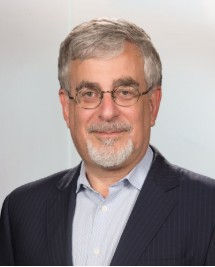
‘The Molecule’ by Dr Rick Sax and Dr Marta New
Last updated:
02/01/26, 18:11
Published:
08/01/26, 08:00
Discussing an upcoming biotech thriller book
Science, to some extent, is very black and white. You carry out experiments; you analyse the data, and you could use numerous techniques to get results. Although there is a range of techniques you could use to analyse and interpret the data, if it has been carried out correctly, the results should be reproducible. 1 + 1 will always equal 2, a eukaryote will always have a nucleus, and pure water will always have a boiling point of 100ºC. Once again, science is entirely black and white. But after an hour of conversation on a cold London afternoon, this writer can conclude that the life of a scientist does not have to be as black and white as their research. This is confirmed by looking at the fascinating lives of Dr Marta New and Dr Rick Sax.
Dr Marta New
Dr. Marta New's career spans the intersection of science and business, beginning with her PhD in Microbiology and Immunology from the University of Illinois Chicago. Demonstrating her versatility, she pursued an MBA at Northwestern University's Kellogg School of Management just two years later. Recognizing her passion extended beyond academia, Dr. New ventured into the business world, where she has held various influential roles. Her career includes positions as a venture capitalist at ARCH Venture Partners, board observer for numerous biotech companies, and strategic advisor to pharmaceutical firms. Dr. New's expertise lies in translating scientific breakthroughs into viable business opportunities, particularly in the areas of drug discovery and development. Currently, she is the founder and CEO of Radyus Research, a company focused on accelerating drug discovery through innovative AI-powered platforms. In this role, Dr. New continues to drive innovation and strategic growth in the biotech and pharmaceutical sectors, leveraging her unique blend of scientific knowledge and business acumen.
Dr Rick Sax
Dr. Rick Sax is a distinguished figure in the pharmaceutical industry with over 30 years of experience in senior leadership positions. His career spans across major pharmaceutical companies, including Merck & Co. and AstraZeneca, where he held executive roles in clinical development. At Merck, Dr. Sax led cardiovascular drug development and served on key business strategy teams. At AstraZeneca, he took on various leadership positions, including Vice President for U.S. Clinical Research and roles in global Medical Sciences. Dr. Sax later joined Quintiles (IQVIA) as Senior Vice President for Integrated Clinical Services, where he played a crucial role in developing innovative approaches to clinical program design and drug development strategies. His expertise encompasses drug research and development, clinical program design, translational medicine, and the application of information technology in clinical research. Currently, Dr. Sax serves as an advisor to biotechnology startups and consulting firms, leveraging his extensive experience to improve pharmaceutical R&D efficiency and productivity.
Through their amazing expertise they have joined hands to write a biotech thriller called the ‘The Molecule’.
What is the inspiration behind the novel The Molecule?
Science thrives on curiosity, discovery, and the pursuit of knowledge, often driven by a passion to understand the unknown. On the other hand, business is fueled by profit, efficiency, and the drive to deliver tangible results in the shortest possible time. The challenges can be immense in the biotech industry, where these two worlds must collide. Transforming a scientific breakthrough into a marketable product requires more than just innovation; it demands strategic thinking, financial acumen, and a deep understanding of the regulatory environment. The journey from lab bench to market shelf is fraught with obstacles, including securing funding, navigating complex regulations, and managing stakeholders' expectations with very different goals.
In their new novel, The Molecule, authors Rick Sax and Marta New delve into the intricate world of drug development, breaking the conventional notion that this process is solely the domain of academia. The book explores the multifaceted journey of a startup company navigating the complex path of science, regulation, and industry. When asked about the inspiration behind the book, Rick and Marta emphasised their desire to shed light on the complex interplay between scientific innovation and the financial forces that drive it. They wanted to illustrate that drug development is a scientific endeavour and a battleground where researchers, regulators, and industry professionals often find themselves at odds.
While The Molecule is a work of fiction, it brings a deep emotional resonance. The authors were keen to portray the technical challenges of developing a new drug and the human element—the hopes, fears, and sacrifices of those involved. Rick and Marta crafted a narrative that captures the struggles and triumphs, emphasising the complex journey of bringing a new drug to market.
The book goes beyond the laboratory, vividly depicting the stages a startup company must navigate to succeed. It paints a realistic picture of the hurdles and setbacks often encountered along the way, making it a compelling read for anyone interested in the intersection of science, business, and human emotion. This biotech thriller also serves as a reminder that the fusion of science and business, though complex, is essential for driving progress and bringing life-changing innovations to the world.
What is the drug development process, and what are the challenges?
As mentioned, drug development is a long, arduous, and multifaceted journey. A journey that, in reality, is not limited to academia or clinical research. We must remember that drug development translates an idea into a drug in the market, a process that spans more than simple laboratory experiments. The book The Molecule gives us a glimpse of this process. As it turns out, there is a lot more that happens even before clinical trials begin.
Unsurprisingly, the process of drug development began before "development". Instead, it starts as drug "discovery". Here, scientists wear their thinking hats to try and understand a disease, hoping to discover new insights or technologies that provide an approach to treatment. As Marta neatly outlined, scientists at this stage are surrounded by numerous questions, such as the drug's mechanism of action, how it works, etc. However, this discovery is not a finished product but rather a technology. Different questions must be asked to translate a fresh-off-the-lab technology into a marketable drug. Namely, "Is it safe and is it efficacious?"
Next, the drug development journey will continue into the preclinical stage. Those who work in preclinical drug development may be familiar with the abundance of cell cultures and animal models used in this stage. Indeed, the preclinical stage often follows either or both in vitro and in vivo testing. Marta also highlighted another key factor, reproducibility. Crucially, a reproducible study refers to a repeated study done under different conditions or parameters and by other researchers where the results or analyses are the same or in agreement. Any study can be vulnerable to biases. Therefore, a reproducible study ensures fair, correct, and trustworthy results that allow scientists the confidence that the drug is safe before it enters clinical trials.
Furthermore, testing the potential drug with a "standard of care" is equally essential. This means testing the candidate against an existing drug for the same disease. The process seeks to observe efficacy, whether the experimental drug is more efficacious than an already marketed drug. In other words, if the drug is working. As you can see, much work must be done before drug development reaches human testing. Preclinical studies may vary in size, but they are crucial in defining how safe the drug is before it is tested on people. Therefore, Rick and Marta emphasise that the preclinical stage must follow good practice and the correct guidelines, collecting data to paint a detailed picture before being given to the regulatory bodies.
Upon the success of preclinical research and the approval of human testing by the regulatory bodies, a process that can take up to 5 years, we finally arrive at clinical trials. In short, clinical trials will further test the candidate drug on human subjects for safety and efficacy, dosage, side effects, and adverse reactions. As the trial progresses, the group size of each phase also increases, and as the number of human subjects increases, so does the cost. Rick and Marta explained that labs or smaller companies will usually carry out the preclinical research, but will search for larger pharmaceutical companies as partners to continue clinical trials. The drug development process is complex and concerns a multidisciplinary team of scientists, corporate partners, and regulatory bodies. However, this process is necessary to create a safe and effective drug that can change lives.
Many science and STEM students gravitate only towards science and their respective passionate fields and, unfortunately, tend to find business intimidating. So, what would be your advice for these students to begin learning more about the business side of STEM and building their own start-up?
The ideal way to answer this question is to consider it in two different parts: exploring a new passion (the world of business) and the advice to learn more.
In many ways, one may always feel the vulnerability of exploring the unknown. Perhaps that is why we live following our passions: there is a certain security in their reliability and certainty for enjoyment and happiness. A safety blanket, so to speak. However, this very blanket could be the culprit that slowly suffocates all possibilities of growth, keeping you safe, secure, and immovable. By reading through their novel, The Molecule, and doing a Google search of these two writers' incredible lives, any reader can surely understand how to grow in pharmacology; there needs to be a specific element of business. Of course, for many, the thought of entering the clutches of the world of business, a world of numbers, negotiations, and a lack of laboratory equipment and sterilisation, might seem daunting. However, it is essential for any reader to understand that if they wish to enter the world of drug development, they will not find this door in academia. Instead, the key to drug development is built when different skill sets, areas of knowledge, and technical expertise come together through the work of a multipurpose team. This delicate and intricate process centres on the team, a team that requires multiple disciplines to work in harmony and in an environment where creativity may flourish.
However, how can one go from understanding the importance of business in drug development to taking the first steps into this new, terrifying, and exhilarating world? The simple answer to this is explored in The Molecule. To succeed in the unknown, one must find a good mentor. Someone you truly believe in to show you the way. Of course, there should always be some caution in ensuring the right mentor is found. However, this should not hinder any keen reader from trying, as every experience can be an opportunity for growth. Furthermore, there are many positive stories of successful mentorships, as seen through Dr Sax’s personal experience. In the beginning, like many in STEM, he considered pharmacology “the dark side”. At the time, he worked at Cornell University Medical Centre, living the life many could only dream of. He spent his days working as a triple blend between a physician, a researcher, and a teacher – his passions. When first approached by a mentor on the possibility of pharmacology, a scene was conjured. A scene that showed the fiery pits of hell with the personification of pharmacology itself as a fearful villain pushing one into damnation. However, the support and encouragement from this mentor were the tiny pushes that convinced him to try, leading him to where he is today.
There are many ways to find these mentors. Through academia, students can take advantage of programs such as hosting entrepreneurial activities, wet labs, organised panels, and events, such as “speak to a member of the industry”. Even exploring master programs in drug development could be a step forward in matching a student with potential mentors. Moreover, outside of the academic halls, there are many opportunities to form connections. By browsing LinkedIn groups, forums, and Reddit posts, you can find your people and see their steps. Following Dr. New’s humbling words, “It is important for students to remember they are not the first in the history of civilisation to think of entrepreneurship, and it is online where they can find signatures of the work others have done". "Your people" will be the ones that share your confusion, fear, perhaps lack of expertise, love for adrenaline, and a good challenge. Once you find them, everything will start flowing. Furthermore, consider how the real world works: if you want something, you need to go get it, be it with cold reach outs into the unknown and follow-up emails. On average, it takes 6 follow-up emails until someone replies to you. Hence, whatever you are doing, selling, or asking, do it 6 times before you give up.
What vision do you see for the future of the biotechnology industry?
When posed this question, both Fredrick and Marta conveyed that the future of biotechnology is heavily unpredictable, primarily due to the variability in the success of biotech startups. Moreover, one significant factor influencing this unpredictability is the funding which these firms receive.
However, the changes in focus to new trends in biotechnology show great promise for how this large industry may grow and develop. For instance, a new trend is the considerable focus on rare diseases and targeted therapies for specific mutations such as the ALMK-14 mutation in lung cancer. There is also a significant focus on looking at disease subcategories and honing in on the specific type of disease. For example, instead of broadly targeting lung cancer, there is a trend towards addressing specific forms such as small cell lung cancer and non-small cell lung cancer. This precise approach aims to focus on specific characteristics of each disease’s subtype, for example, some forms of lung cancer may be more aggressive than others.
Moreover, both Marta and Richard both highlighted the intertwining of biotechnology with other fields, specifically artificial intelligence (AI). An interesting example of this is utilising AI to develop targeted therapies for molecular markers of disease which may have been identified by lab techniques such as Next Generation Sequencing (NGS).
Finally, the industry encompasses a wide range of professions from smaller pharmaceutical companies to larger pharmaceutical firms each with different focuses. Due to these varied focuses, the industry will likely develop and progress in diverse ways, reflecting the various aims of these firms. This diversity further reinforces the unpredictability of the industry’s future but also makes it an interesting field to watch.
A massive thank you to Nick Johnstone for giving Scientia News this opportunity; it means a lot. We have learnt so many new things and it has been very inspiring talking to Rick and Marta.
For more information, visit the following hyperlinks: Dr Rick Sax (research)
Written by Inês Couto André, Jeevana Thavarajah, Stephanus Steven & Harene Elayathamby
Related book reviews: Intern Blue, The Emperor of All Maladies
Project Gallery